
Functional Hand Deep Dive, Part 4: Wrist Mechanism
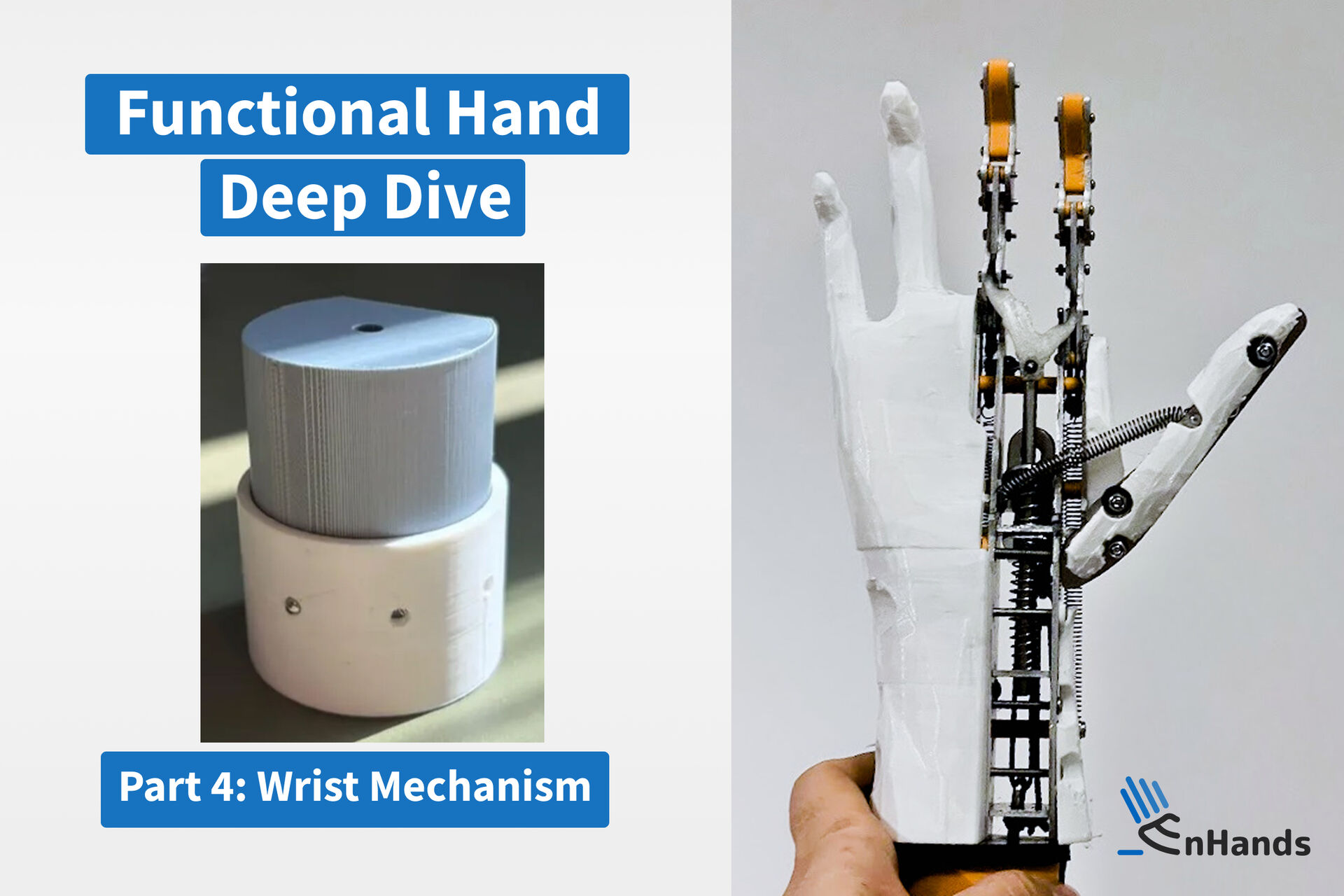
In the development of advanced prosthetic hands, the wrist mechanism plays a fundamental role in providing natural movement and functionality to the prosthesis. At EnHands, we are continuously working on refining this mechanism to enable versatile and practical hand positions for daily use.
What is the Wrist Mechanism?
The wrist mechanism is the component that enables the prosthetic hand to rotate around a single axis, allowing the user to position the hand in the different orientations needed for everyday activities — like riding a bike (horizontal orientation) or grabbing a glass of water (vertical orientation). This adaptability is essential to make the prosthesis as functional as possible.
Main Components
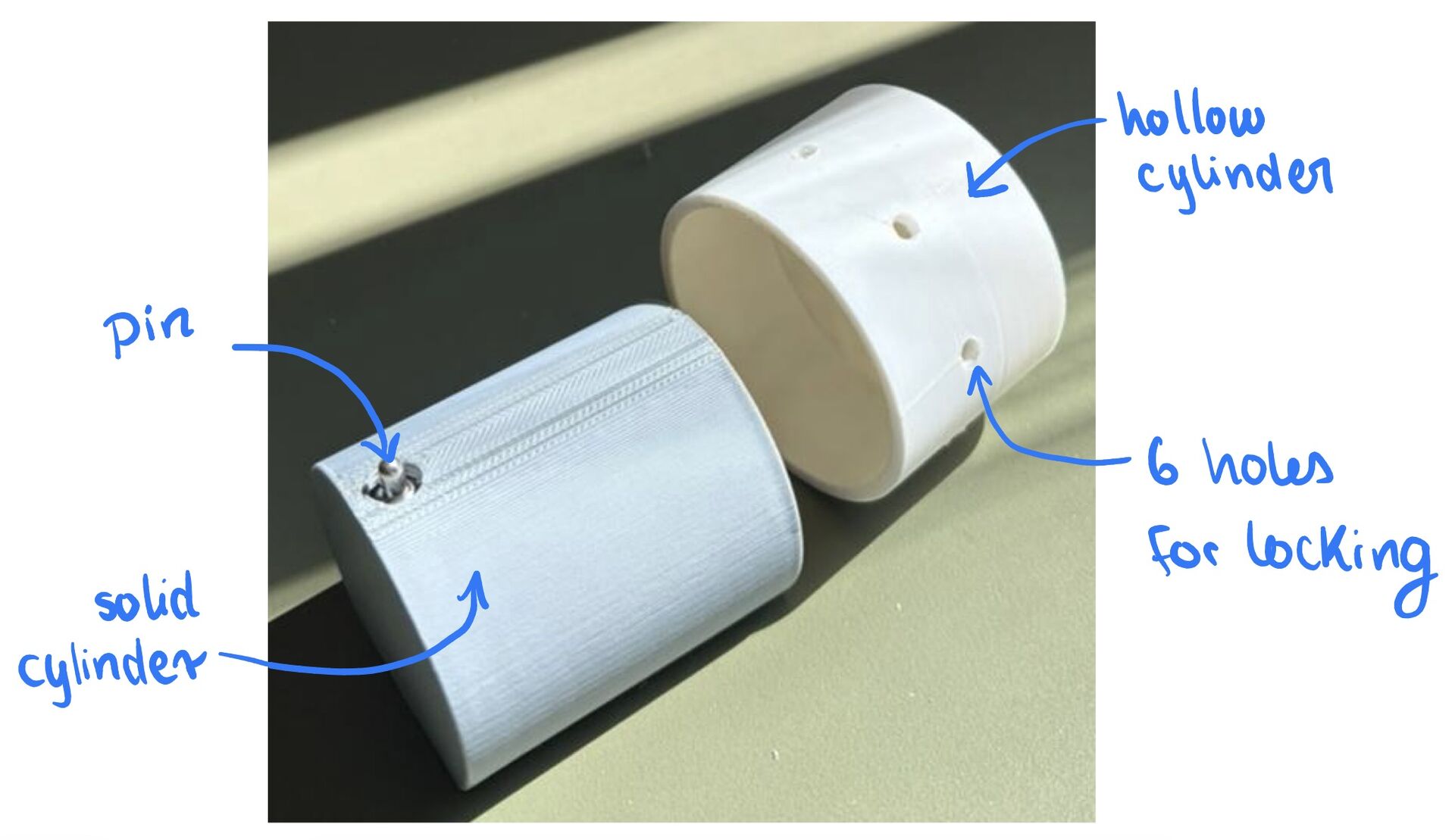
The mechanism consists of three main parts:
- A solid cylinder screwed into the arm,
- a pin screwed into the solid cylinder
- and a hollow cylinder screwed to the hand, with six holes allowing the pin to lock the hand into different positions.
Currently, the cylinders are 3D printed using PLA, while the pins are made of aluminum.
Design and Control
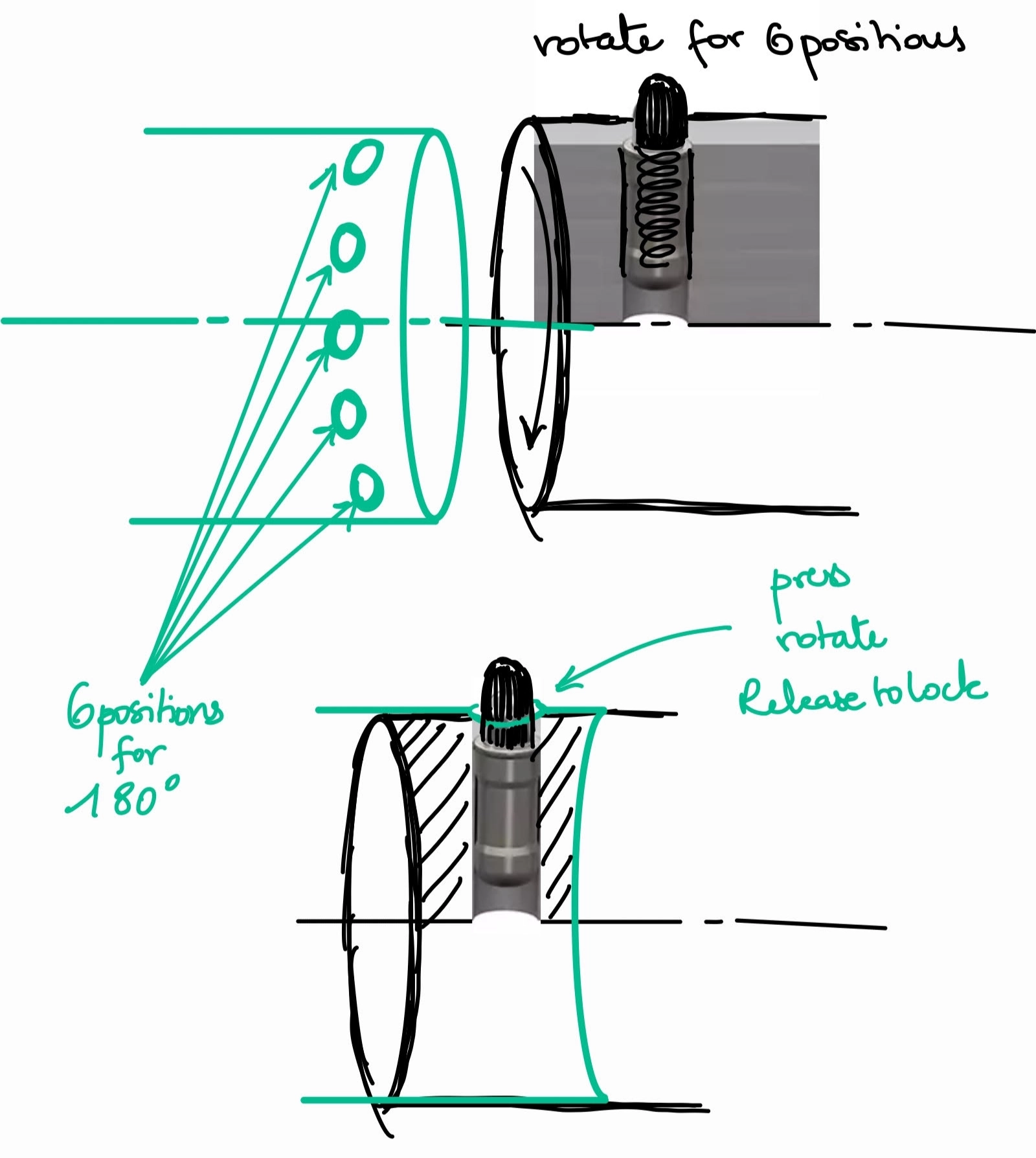
The wrist mechanism is designed for simplicity and accessibility. To change the hand’s position, the user presses the pin with their other hand to release and rotate the wrist to the desired angle. This manual control keeps the mechanism independent and easy to maintain.
Challenges and Solutions
One of the main challenges was ensuring a stable lock between the pin and the holes in the hollow cylinder. Initially, the holes were too large, which made the locking unstable, but this issue was resolved by adjusting the design to better conform to size needs.
The mechanism is also being improved to address accessibility issues: pressing the pin fully to release the lock is difficult. To solve this, the team plans to redesign the hole shape into a conical form. This will allow the pin to slide inward with less force, making it easier to press and release the mechanism with a more accessible motion.
Advantages and Applications
Compared to more complex wrist mechanisms, ours is economical, requires few parts, and is easy to maintain. As mentioned before the design is modular, meaning that it’s independent from other prosthetic components (doesn’t interfere with other mechanisms) and the different parts of the wrist can be replaced independently — for example, if a pin wears out, only the pin needs to be changed.
Next Steps
The wrist mechanism remains a crucial component of our prosthetic hand project, balancing functionality with simplicity. We are actively working on improvements to enhance accessibility, durability, and overall user experience. Our current priority is to have users test the device and provide feedback, which will play a key role in guiding future updates and refinements, including continued development of the locking mechanism.
Stay tuned for the next blog posts, where we will continue diving into other components of the EnHands prosthesis!